Balanza is a free calorie counter for Android in eight languages: English, Spanish, Portuguese, Romanian, Greek, Hungarian, Bulgarian and Slovak. You photograph a meal, type a few words or scan a barcode; the AI works out the calories and the protein; and a daily target keeps correcting itself from the way your weight actually moves, week after week. No account, no subscription, no photo archive.
Seven ways to log a meal
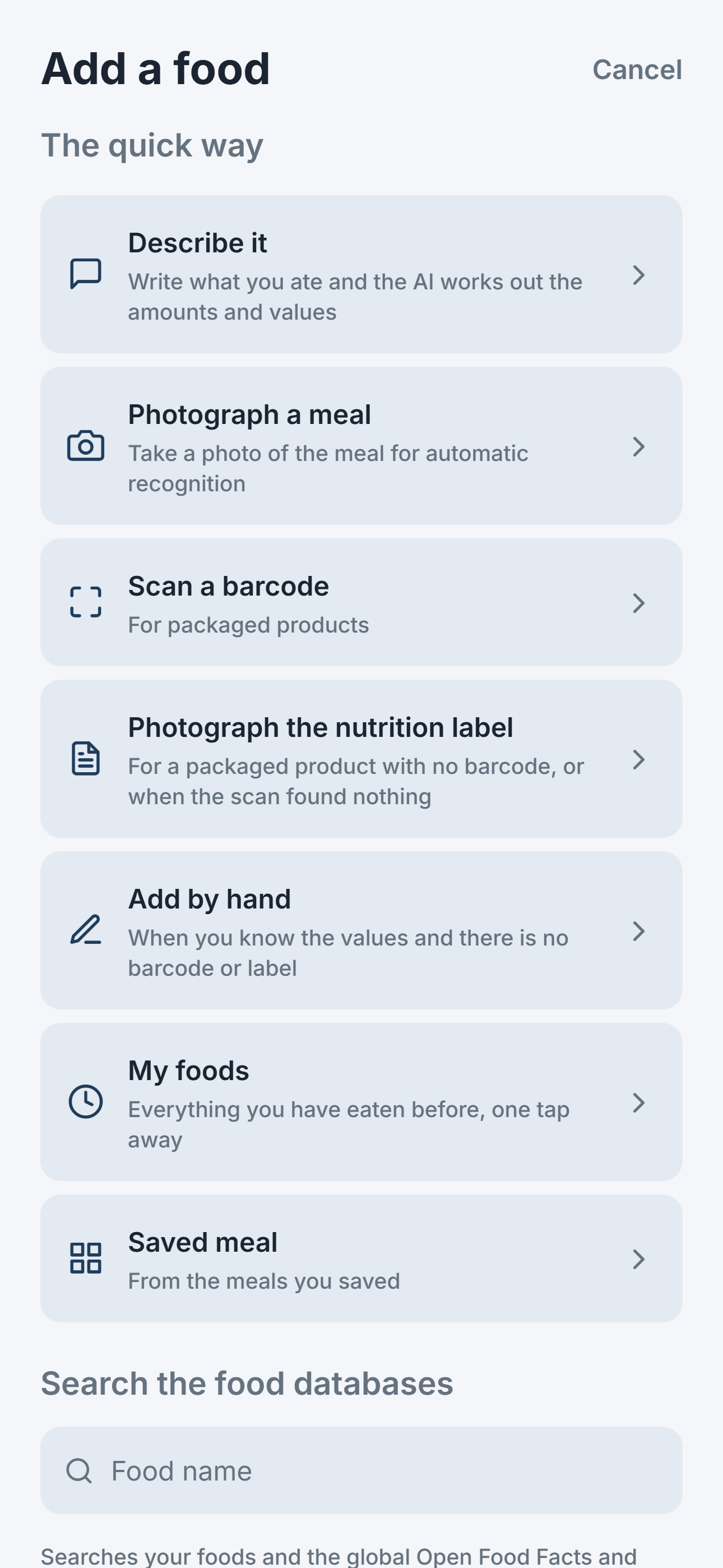
- Describe it. "Two eggs and a slice of toast", in your language, with your own portion words: a slice, a cup, a handful. The AI works out the amounts and the values. Common answers are cached, so a second person typing "pizza" in Spanish gets an instant reply.
- Photograph the meal. Point the camera at the plate. The AI lists what it sees, with an estimated weight for each food, and you correct anything before saving. The picture is shrunk on the phone and discarded once the answer is back.
- Scan a barcode. Packaged products come from Open Food Facts and USDA FoodData Central, matched by the code on the label, so the numbers are the ones printed on the pack.
- Photograph the nutrition label. For a packaged product with no barcode, or when the scan found nothing: the AI reads the table on the back of the pack.
- Search the databases. Type a name and search your own foods and the global Open Food Facts and USDA databases.
- My foods and saved meals. Everything you have eaten before is one tap away, and any set of foods can be saved as a meal with a name and logged again in one go.
- Add by hand. When you know the values and there is no barcode or label.
Whatever the path, everything lands on one confirmation screen where the quantity and the values can be fixed, and every correction is remembered in your own food list for next time.
A target that learns from your scale
Most calorie apps give you a number on day one and never look at it again. Balanza starts the same way, with the Mifflin-St Jeor formula, your activity level and the pace you chose. Then, once a week, it compares what you logged with how your weight really changed, estimates your true daily expenditure and moves the target a little. If you under-log by a steady 15 percent, the target absorbs it. Every change is explained in plain words on the progress screen, and guard rails keep the number from jumping.
What the progress screen shows
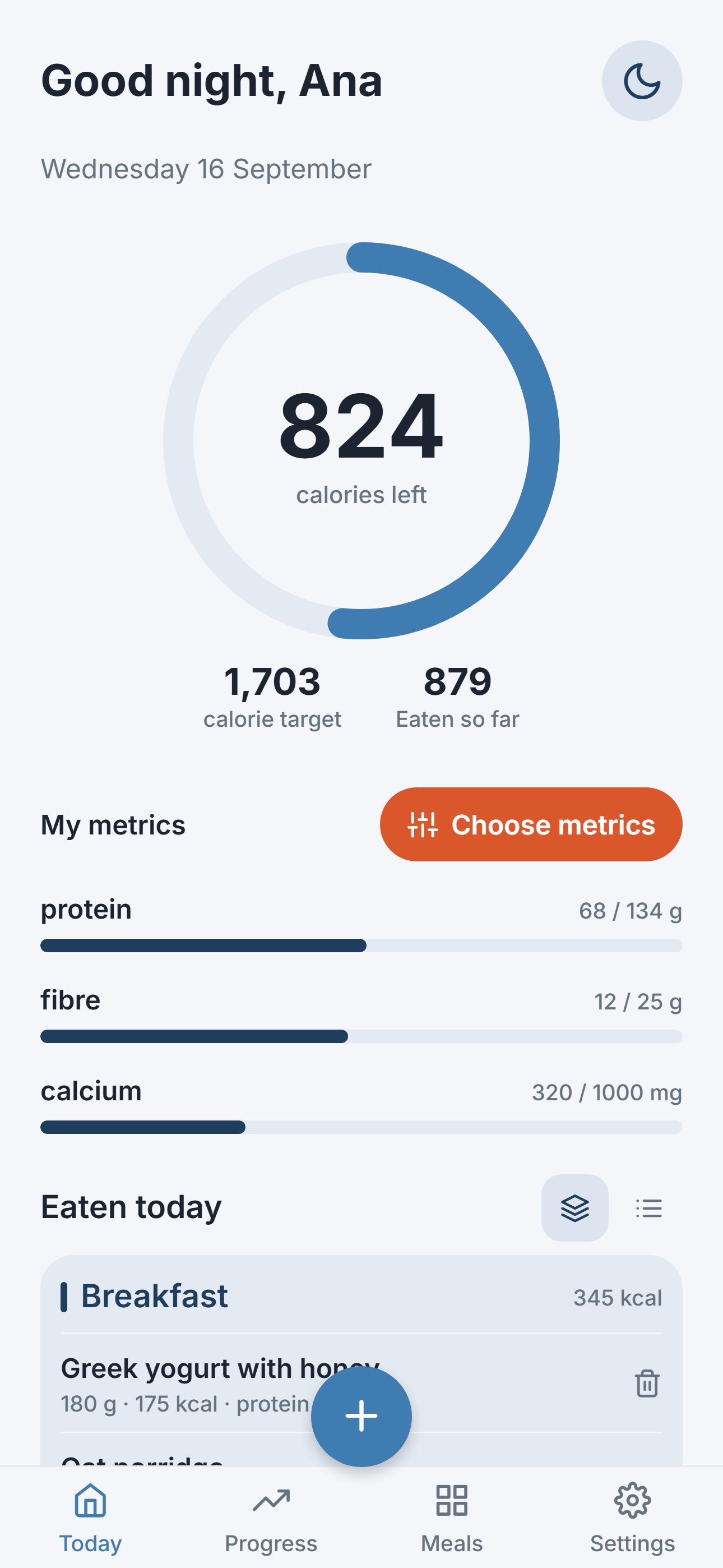
- The diary by meal: breakfast, lunch, dinner and snacks, with calories and protein for each and for the day.
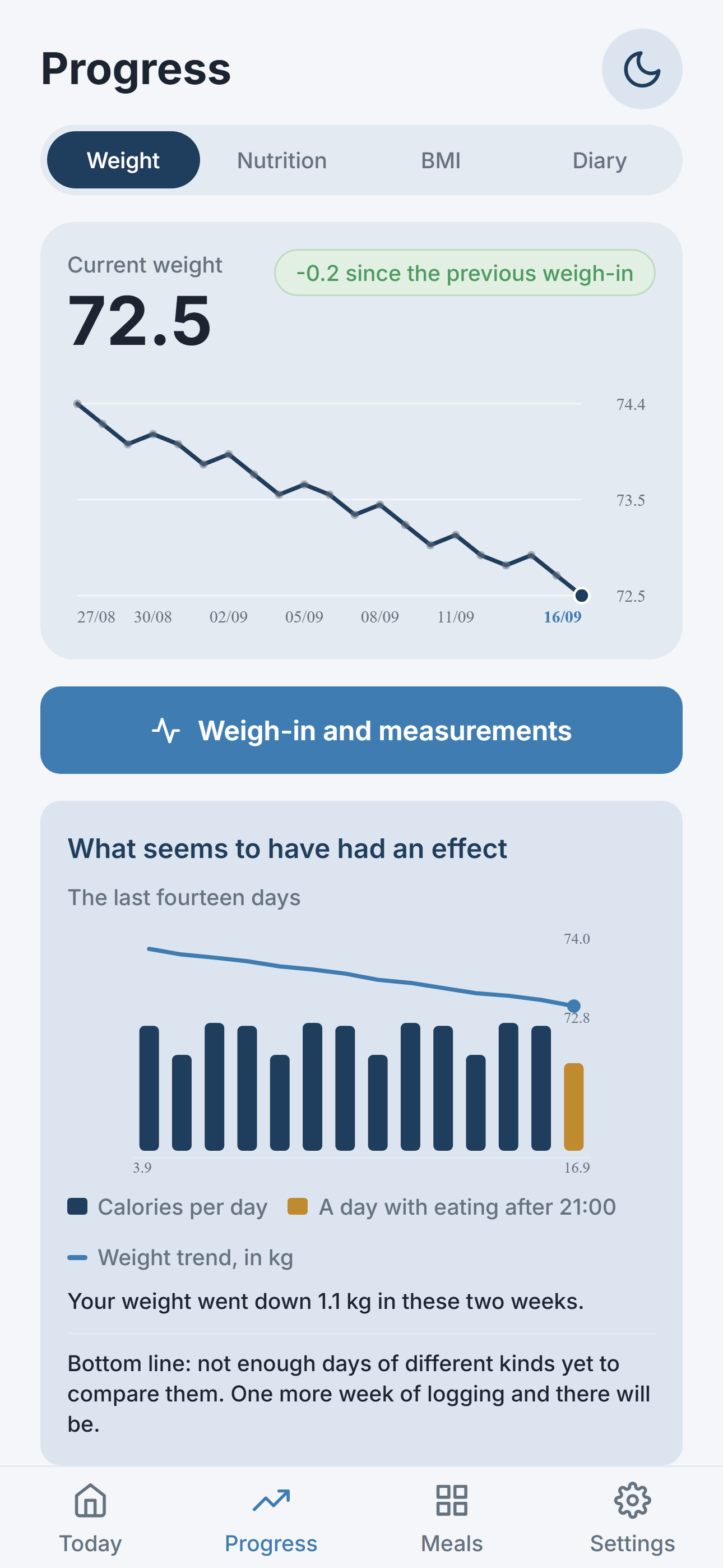
- The weight trend: a smoothed line through your weigh-ins, so one salty dinner does not look like a failed week.
- The weekly overview: average calories and protein per day, days on target, the change in the target and why.
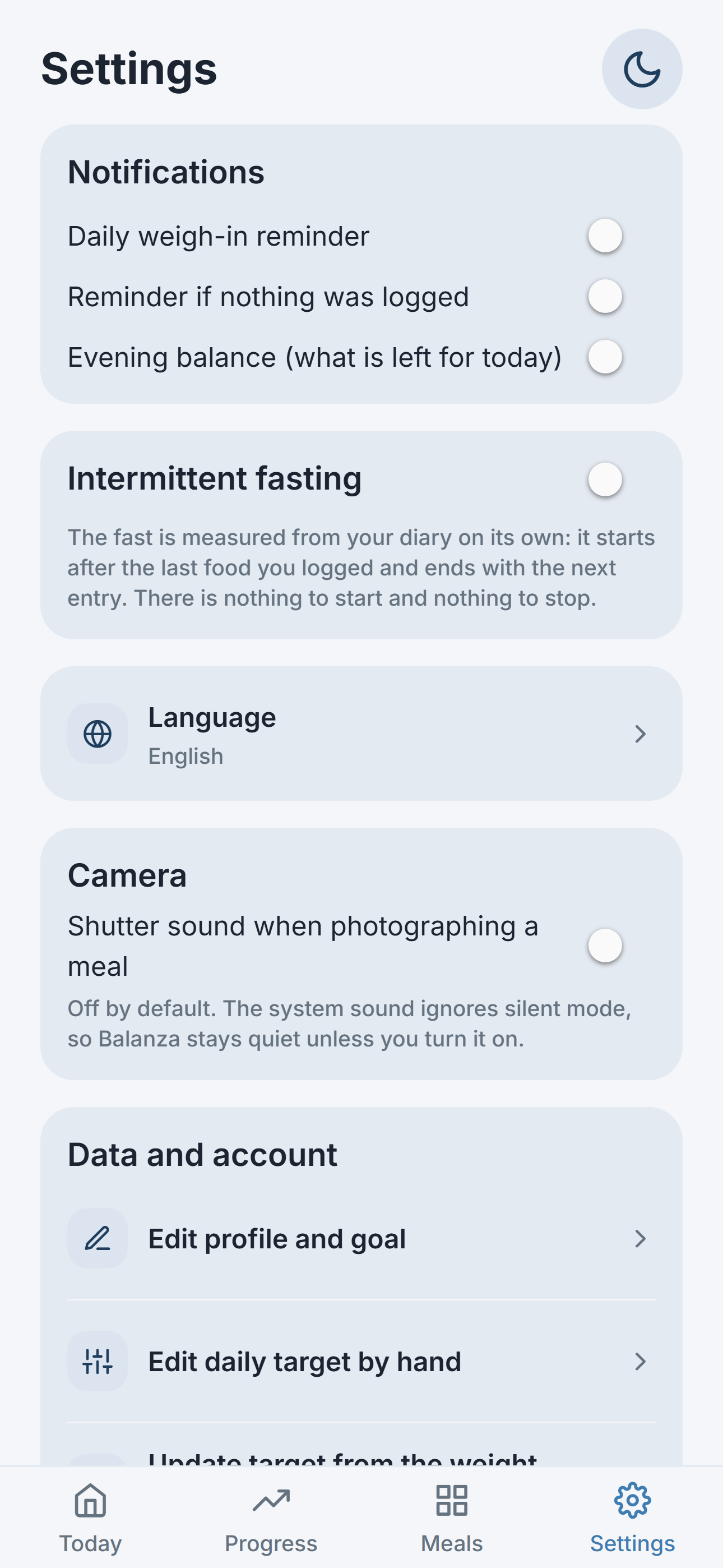
- Intermittent fasting, measured, not timed: the gap between the last entry of one day and the first of the next is your fasting window, read straight from the diary.
- Waist and weight history, with reminders you can turn on for weigh-ins and meals.
Eight languages, one app
Balanza picks the language of your phone and lets you switch in Settings. The whole app follows: the interface, the day and month names, the first day of the week (Monday), the number format, and the AI itself, which names the foods and the portions in your language. Every translation was written by a person who speaks the language and reviewed a second time before release.
Privacy and sources
There is no sign-up. Each install gets an anonymous id; the diary is tied to that id and to nothing else, and a button in Settings deletes it from the server. Food photos are never stored. The formulas and the databases the app relies on are listed inside it, each with a link to the original publication, together with a clear note that the app is a diary with a calculator and not medical advice.
The story
Balanza is the international edition of Maazan, a Hebrew nutrition app on Google Play and the App Store since 2025. The Hebrew app is right-to-left, knows Israeli products and starts the week on Sunday; Balanza is the same engine rebuilt for left-to-right languages, international food databases and a Monday week, so that friends and family abroad get the same tool in their own language. The two apps share their code and their lessons, and every improvement in one reaches the other.
Links
- Get it on Google Play: Balanza
- Share link for friends: balanza.pages.dev/get
- Privacy policy
- Support: support@maazan.info